Have you ever wondered if love could outlast memory loss, failure, or time itself? In this review, discover what Enduring Love reveals about the kind of love that truly lasts.
Book Title and Author:
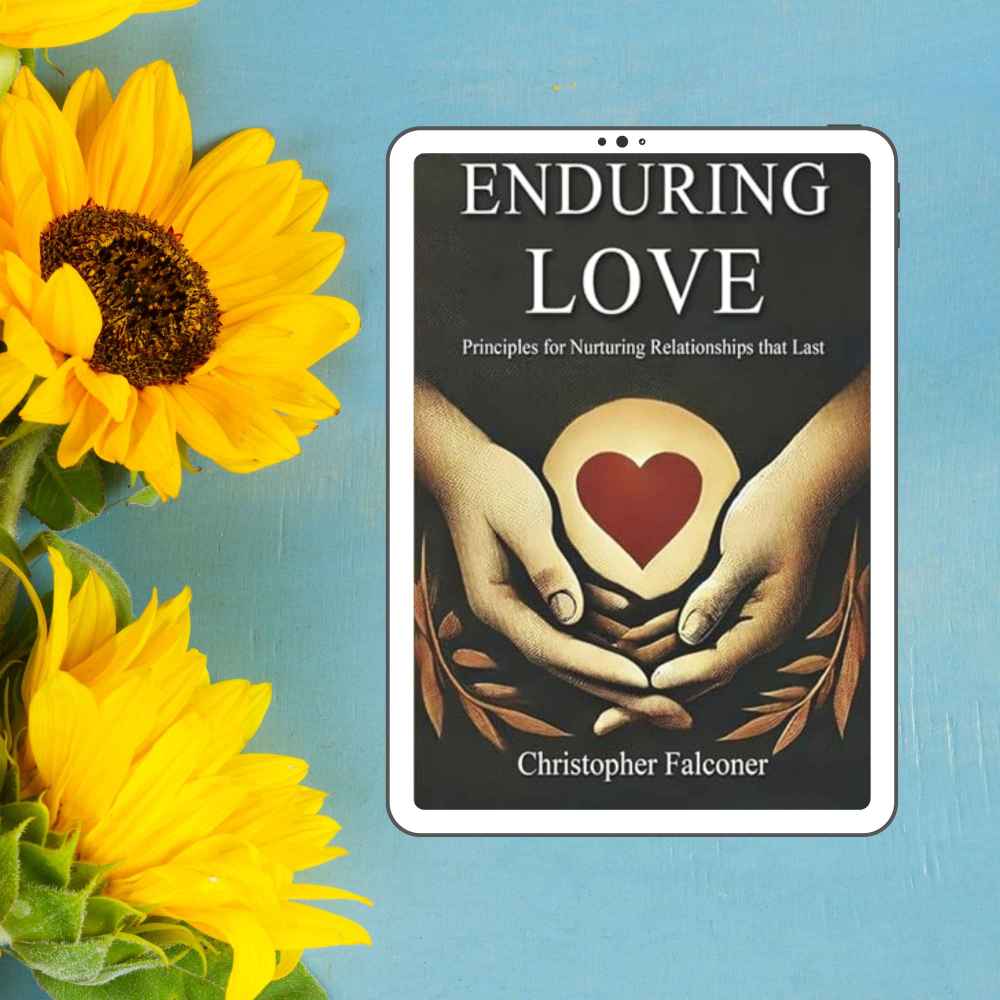
Enduring Love by Christopher Falconer
Genre, Sub-genres, and Themes:
Genre: Inspirational nonfiction
Sub-genres: Christian living, relationship growth, devotional reflection
Themes: Patience, humility, forgiveness, perseverance, hope, and divine love
Review:
What makes love endure when everything else changes? That question hums quietly through every page of Enduring Love by Christopher Falconer—a work that reads less like a manual and more like a conversation between the soul and its deepest longing to be understood. Drawing inspiration from 1 Corinthians 13:4–8, Falconer dismantles the myth that love survives on emotion alone. Instead, he presents it as a living discipline—one built from patience, forgiveness, humility, and grace.
Each of the book’s sixteen chapters unfolds like a parable. There’s the story of Maud and George, whose commitment endures through memory loss, and the tale of Ethan and Caleb, brothers learning humility through pride’s quiet fracture. These aren’t sermonized case studies; they’re windows into ordinary moments transformed by faith and character. The writing is heartfelt but never sentimental, instructive without being prescriptive. Falconer’s tone evokes both mentor and friend, guiding readers through hard truths softened by compassion.
The book’s rhythm mirrors real relationships—uneven, sometimes heavy, but always hopeful. Its structure invites reflection: each story pairs with Scripture, meditative thoughts, and practical ways to embody love’s qualities. It’s not an easy read in the emotional sense—it asks you to confront your capacity for patience, your response to betrayal, and your willingness to forgive. Yet its tenderness ensures the journey feels restorative rather than reprimanding.
What’s striking is Falconer’s integration of psychological insight within spiritual framing. Concepts like emotional safety, communication, and resilience are presented through a lens that respects both science and faith. Research in relationship psychology supports many of his ideas: patience lowers stress, forgiveness promotes mental well-being, and gratitude rewires the brain for empathy. These truths echo throughout the narrative, grounding the book’s theology in lived human experience.
Stylistically, Enduring Love avoids cliché. Instead of grandiose promises of perfect relationships, it honors imperfection as the soil where real love grows. Falconer writes, in essence, that love’s proof is not in the ease of its moments but in its endurance through difficulty—a message relevant whether you’re married fifty years or learning to love yourself for the first time.
This book is not for readers seeking abstract philosophy or dramatic confessionals. It’s for those willing to practice love as a craft—to learn, fail, and try again. Readers of all faiths will find something recognizable in its themes: reconciliation, compassion, and the quiet heroism of staying when it would be easier to leave.
Ultimately, Enduring Love succeeds because it reminds us that love—real, lasting love—is less about passion than about presence. It’s not a feeling that happens to us but a choice we return to daily. In a world that celebrates speed, Falconer offers a sacred counterpoint: love, like a garden, grows only when tended with care, humility, and faith.
About the Uplifting Lit Award
The Uplifting Lit Award honors books that embody the themes of hope and optimism in meaningful, diverse, and holistic ways. We believe in the potency of literature to inspire change, motivate readers to overcome challenges, and nurture a brighter outlook on life. This award is our way of shining a spotlight on books that bring this message to life. To request for a review or to nominate your book, click here.
Important Notes
At Words of Hope and Optimism, the views expressed in our posts reflect each writer’s own insights and emphasize uplifting themes of hope and inspiration. Our platform showcases a variety of writings, demonstrating our commitment to respect diverse perspectives on these important topics. All of our reviews on this site are unpaid.
If you have questions or concerns, please reach out. We invite you to engage with our content and explore the nuances of each work. For more details, please visit our full review policy, site disclaimer, and privacy policy.
Your Insights Matter
As we explore the themes of hope and optimism in our feature, we’d love to know your thoughts!
- What do you think about this post?
- Which part or message resonated with you the most?
- What other ideas would you like to share from your own life’s journey?
Do comment below.
Useful Links
Here are the shortcuts to our site’s important pages:
- About Words of Hope and Optimism
- Book Review Requests Step 3
- Uplifting Lit Award
- Blogs of Hope and Optimism
Meanwhile, here are the links to some of our content:
- 365 Days of Quotes
- Archives
- Book Reviews of Hope and Optimism
- Children's Book
- Christian
- Coming of Age
- Conversations of Hope and Optimism
- Expert Insights
- Freebies, Discounts, and Other Promos
- Guest Posts
- Historical Fiction
- Interviews
- Non-fiction
- Other Fiction
- Passion
- People
- Perspectives
- Places
- Poems of Hope and Optimism
- Poetry
- Poetry Month Poems by E
- Positive Results
- Quotes from the Bible
- Quotes of Hope and Optimism
- Reviews by E
- Sci-Fi/Fantasy
- Snippets of Hope and Optimism
- Something Aussie
- Something Filipino
- Stories of Hope and Optimism
- Today's Feature
- Uplifting Lit Award Winners
More Like This Post

Habits Restore Perspective and Hope
Ever felt like your problems are bigger than the planet? This roundup shares unusual and practical habits to regain perspective, helping readers see overwhelm in a new, manageable light.
Keep reading
Daily Habits to Cultivate a More Optimistic Mindset
Can tiny, everyday actions truly reshape your mindset? This roundup uncovers practical habits—from movement to reflection—that subtly build optimism, showing readers how small choices create lasting impact.
Keep reading
Words, Affirmations, and Perspectives to Enter the New Year with Renewed Hope and Confidence
What if hope didn’t come from believing harder, but from writing down proof that today was different from yesterday? Read on to see how people rebuild confidence through evidence.
Keep readingDiscover more from Words of Hope and Optimism
Subscribe to get the latest posts sent to your email.
 Words of Hope and Optimism